

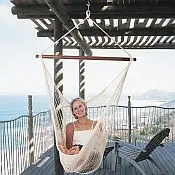
The Hammock Swings you'll find at BackyardCity.com are made of durable materials and quality craftsmanship. Our Hammock Swings and Air Chairs are guaranteed against manufacturer's defects. In addition to handcrafted Hammock Swings, we also offer Rope Hammocks (handcrafted woven and net), Fabric Hammocks, Camping Hammocks, Hammock Stands, Hammock Hanging Kits, and Hammock Accessories.
Olefin Hammock Swings are uniquely constructed with a synthetic braid. They are color-fast, highly resistant to rot and mildew, and treated with UV protectant. Olefin makes an excellent choice for hammocks and swings because the material dries very quickly and is resistant to breakdown due to chemicals, perspiration, mildew, and weather. Olefin is also stain resistant, easy to clean, and light weight -- everything you would look for in a rope hammock swing.
Nylon Hammock Swings are stronger than cotton yet soft, elastic, and lustrous. Their comfort is hard to beat. The Nylon Hammock Swings we offer are hand woven from 100% industrial strength nylon. The yarn used is the same yarn found in fishing nets used in fishing industries. It is meant to be in and out of water and bright sunshine, wet and dry. It is built to last, yet the rope is very soft and silky to the touch. The nylon rope used to make these Swings and Hammocks has a tensile strength of 1000 lbs. and has been treated for rot, mildew, and ultra violet protection.
Our Economy Net Hammock Swings are made with the same attention to detail and craftsmanship as the more expensive olefin and nylon swings. The Net Swings are durable, yet they cost less. These hammock swings are made from 100% flat weave polyester sports mesh. They have been treated for rot, mildew, and ultra violet protection, and the hanging harness is hand made using olefin rope.
Please click on a link or photo below for additional product information.
Find the Perfect Hammock Swings just right for You!
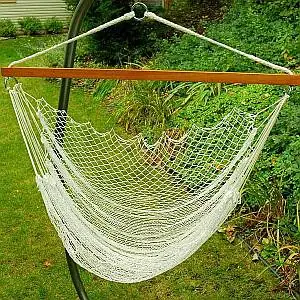 Nylon Net Hammock Chair
Price: $74.99Sale Price: $59.95
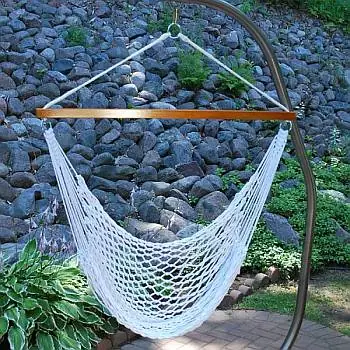 Poly Rope Hammock Chair
Price: $104.99Sale Price: $81.95
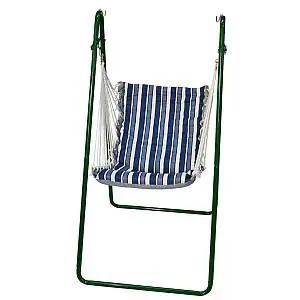 Swing Chair and Stand Combination
Price: $174.95Sale Price: $152.95
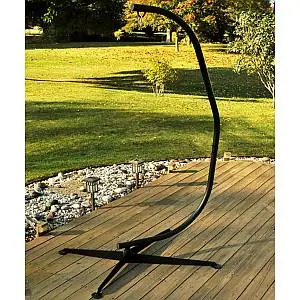 Hammock Accessories
Related Products
Last Updated: 02/26/2026 04:24 AM - ID:1313